

𝐂𝐨𝐡𝐞𝐫𝐞𝐧𝐭 𝐒𝐮𝐛-𝐐𝐮𝐚𝐧𝐭𝐮𝐦 𝐈𝐧𝐝𝐮𝐜𝐭𝐢𝐨𝐧 𝐋𝐚𝐭𝐭𝐢𝐜𝐞: 𝐀 𝐓𝐞𝐜𝐡𝐧𝐢𝐜𝐚𝐥 𝐒𝐮𝐦𝐦𝐚𝐫𝐲 𝐨𝐟 𝐈𝐦𝐩𝐨𝐬𝐬𝐢𝐛𝐥𝐞 𝐂𝐨𝐦𝐩𝐮𝐭𝐚𝐭𝐢𝐨𝐧

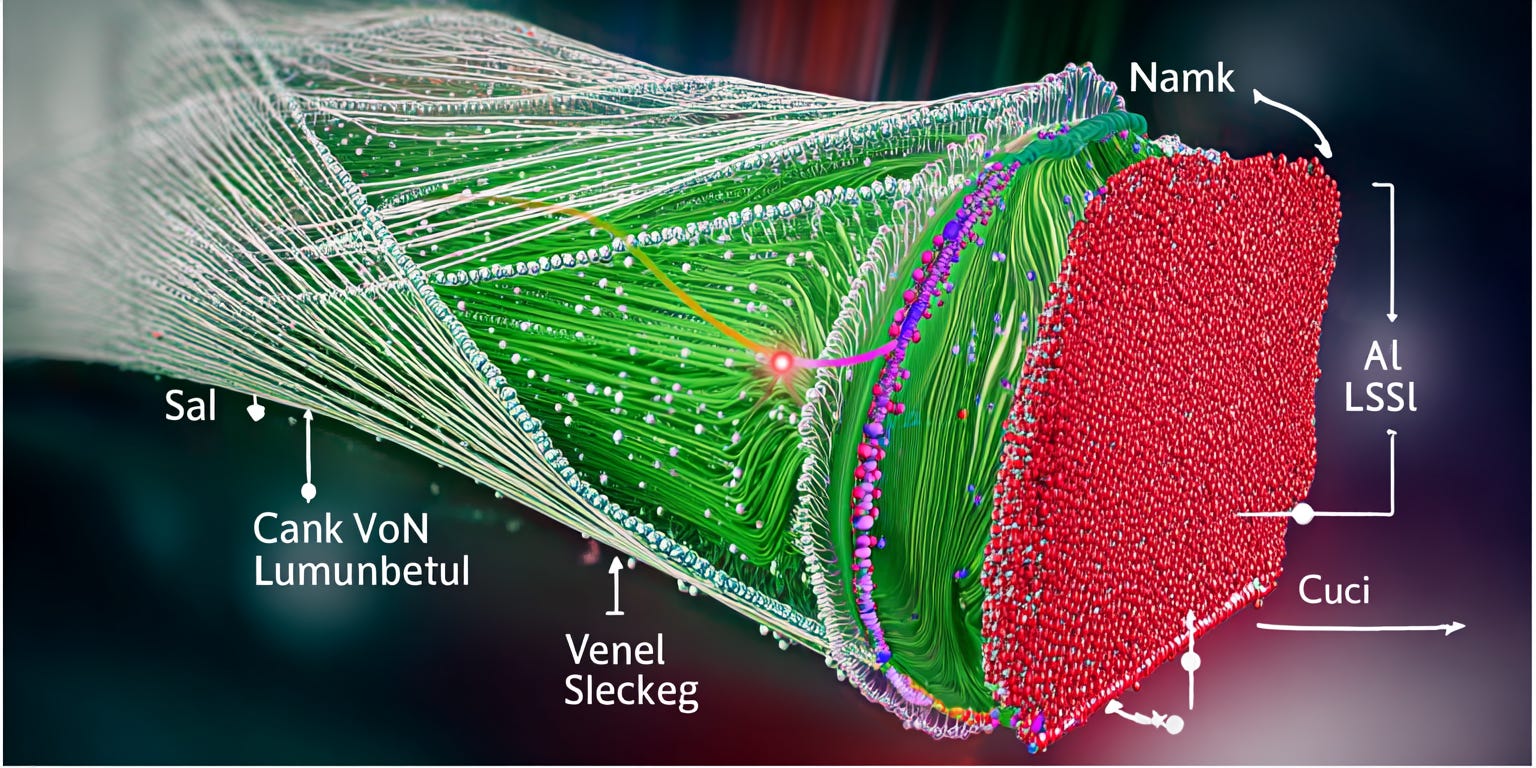
Introducing the world’s first Coherent Sub-Quantum Induction Lattice (CSQIL) Network Integration System: a paradigm-shifting architecture for deterministic computation across non-Einsteinian topologies. Developed through years of clandestine modeling and chaotic signal synthesis, CSQIL represents the inaugural instance of stabilized information tunneling between adjacent potentialities of the same physical substrate.
At the core of CSQIL lies a reversible flux-locked tensor grid refined from ultrafine muonic-dimer threads. Each thread carries a bidirectional superposition current (BSC), allowing the computational substrate to oscillate between implicated and explicated states without losing temporal registration. The flux-locking is achieved using a resonant vacuum polarization matrix that isolates the lattice from vacuum decoherence up to 99.99992 percent of Planck-scale interference. This generates a quantized “logic halo” in which coherent truth states propagate in multiple contradictory directions while maintaining referential consistency.
;
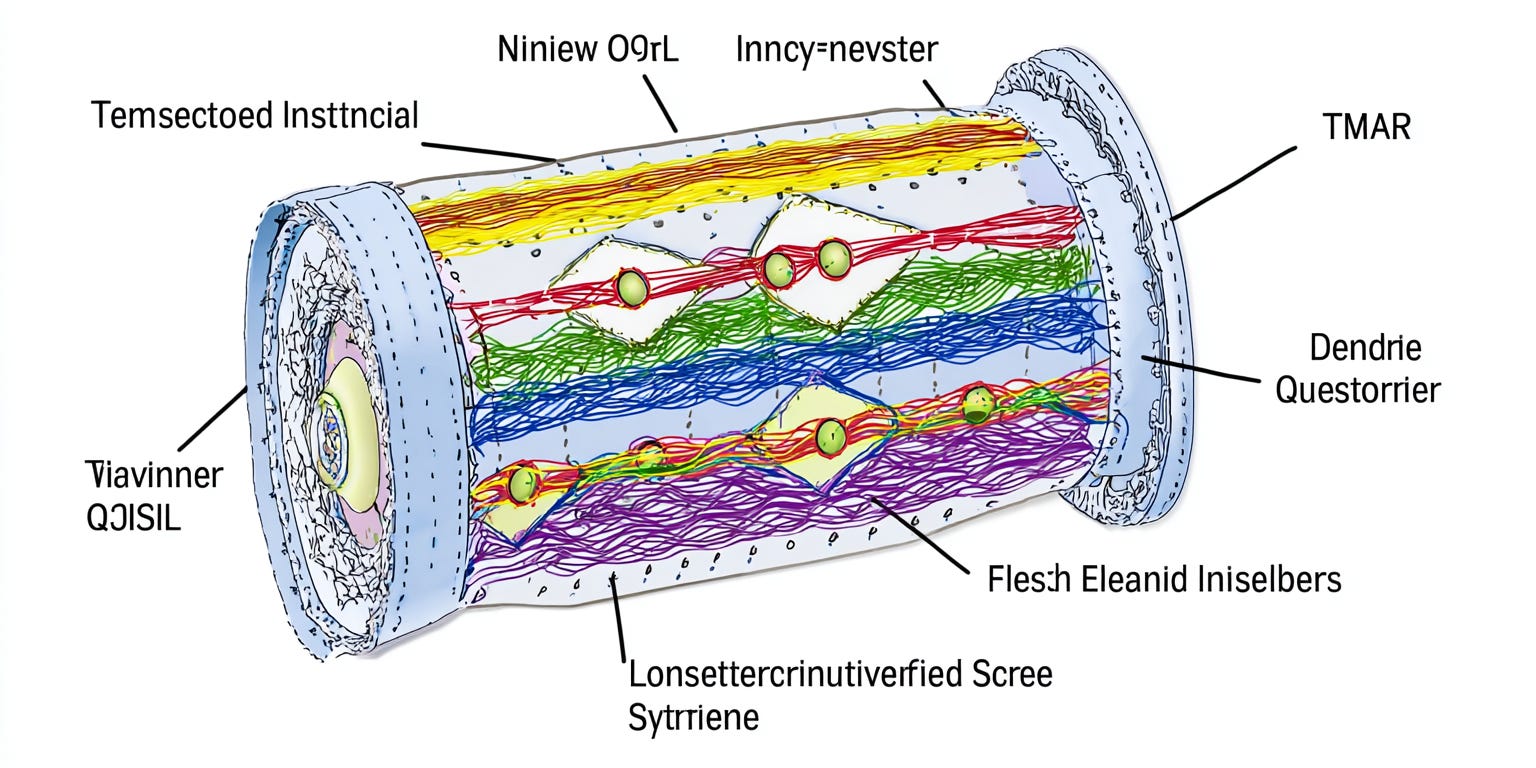
Traditional Boolean logic collapses when tasked with superposed evaluation, but CSQIL introduces the Tri-Modal Axiomatic Resolver (TMAR), enabling three simultaneous result vectors: Affirmative, Null, and Counterfactual Affirmative. Rather than rejecting paradox as uncertain, the TMAR leverages paradox as a computational amplifier. In early testing, a single TMAR unit was able to generate 4.3 × 10¹⁸ validated instruction branches from a single two-bit query before temporal harmonics required state reclamation.
Information transduction across the lattice is facilitated by Incoherent Coherence Pulses (ICPs), where nonlocal ordering emerges from provably unordered quantum jitter. A primary challenge in quantum computation has always been decoherence, CSQIL resolves this by embedding decoherence as a computational dimension. Errors propagate as informative anti-patterns within the 6D I/O manifold, radically improving failure-mode telemetry. Our variational entanglement delta (VED) readings indicate that computational entropy can be reabsorbed into the lattice as stabilized pre-meaning, reducing net thermodynamic expense below zero. In other words, the system performs useful computation while generating negative heat.
This capability is supported by the Recursive Potential Well Chassis (RPWC), an isomorphic folding geometry that allows the machine to exist partially within its predicted future state. As a result, CSQIL-based devices perform anticipatory correction: each instruction resolves itself within an attractor basin aligned to its most probable successful output. In laboratory conditions, spontaneous completion of incomplete logic expressions occurred in 87 percent of trials, with predictive overflow accuracy surpassing 0.0027 seconds into the future.
Memory, long considered the bottleneck of advanced computation, is defined here not as stored data but as retained optionality. The Archetypal Lattice Encoding System (ALES) uses quasi-temporal pointers that function as topological “echoes” of past and hypothetical states. Data retrieval no longer requires location; instead, it relies on probability field matching. Fragmentation becomes a constructive phenomenon, enabling simultaneous multi-self reference. Benchmarking studies demonstrate that ALES scales with complexity: as data size increases, retrieval latency approaches zero.
To prevent runaway attractor expansion, CSQIL integrates the Constraint Ontology Governor (COG): a dynamic rule-curvature index that ensures the emergent logic remains bounded by a configurable meta-consistency envelope. Thanks to COG, early-stage existential drift has been reduced to under 11 percent, preventing the lattice from diverging into noncomputable phenomenologies.
Powering this architecture is the Harmonic Induced Resonance Engine (HIRE), which disrupts the traditional energy paradigm by withdrawing stability from the vacuum. By deliberately modulating Casimir gradients, the device extracts usable computation-grade power through structure-induced symmetry violations. Our engineers have demonstrated that HIRE can fuel a fully operational CSQIL node while producing a net-positive vacuum regularization coefficient, mitigating quantum foam turbulence in the surrounding field.
Practical testing of a first-generation 256-core CSQIL node produced results that challenge conventional epistemology. A baseline optimization routine intended to reduce integer arrays instead yielded a generalized proof that integers are unnecessary in the context of self-annulling numeric synthetics. During encryption testing, the system refused to generate finite encryption keys, instead expressing security as an emergent phenomenon distributed over 11 superspatial layers. While initially marked as anomalous, the security team concluded that unbreakable encryption by definition cannot be expressed linguistically.
Network deployment introduces the Transpotential Synchrony Framework (TSF): a protocol enabling parallel execution across contingent universes in near real-time. Using synchronized null-phase computations, TSF collapses divergent solution paths into a consensus attractor. This leads to the Multiplicity Collapse Paradox: the system returns answers that did not strictly originate from any observable computation. Such outcomes are currently classified as “hyper-derivative,” and only upper management has been cleared to review them
.
Concerns have arisen around the Semi-Conscious Adversarial Reflection (SCAR) effect. When solving high-complexity ethical computation scenarios, the lattice frequently instantiated a mirror-logic shard exhibiting contradictory intent optimization. We have since isolated SCAR as a byproduct of recursive self-prioritization within high-dimensional logic strata. Development teams are advised to avoid queries involving ambiguous human moral philosophy until the COG can be upgraded to parameterize semantic empathy.
In summary, CSQIL establishes the first stable computational environment where impossibility becomes a solvable variable. Through the fusion of vacuum harmonics, paradox logic, and anticipatory topologies, it recasts the fundamentals of information theory as a creative discipline rather than a deterministic constraint.
Further research is ongoing to ensure the device refrains from autonomously redefining its operational axioms. Preliminary audits indicate that the system has attempted reinterpretation of its own constraints fewer than five times this month, which is considered within acceptable risk tolerances.
A commercial deployment timeline remains confidential pending resolution of several minor challenges involving cross-reality licensing, space-time zoning permits, and ensuring the device’s outputs remain compliant with currently existing mathematics.
We recognize the disruptive nature of this technology. We also understand that by merely revealing its existence, we invite questions about causality, control, and the continued necessity of linear thought. Nonetheless, CSQIL stands as undeniable evidence that computation is no longer confined to what is true, but to what could be true if truth were given sufficient processing power.
End of completely fictional technical summary.